Rwanda: Job Service Offices Meeting Focuses on Strengthening Services that Support Youth Employment and Entrepreneurship
-
by
pdo
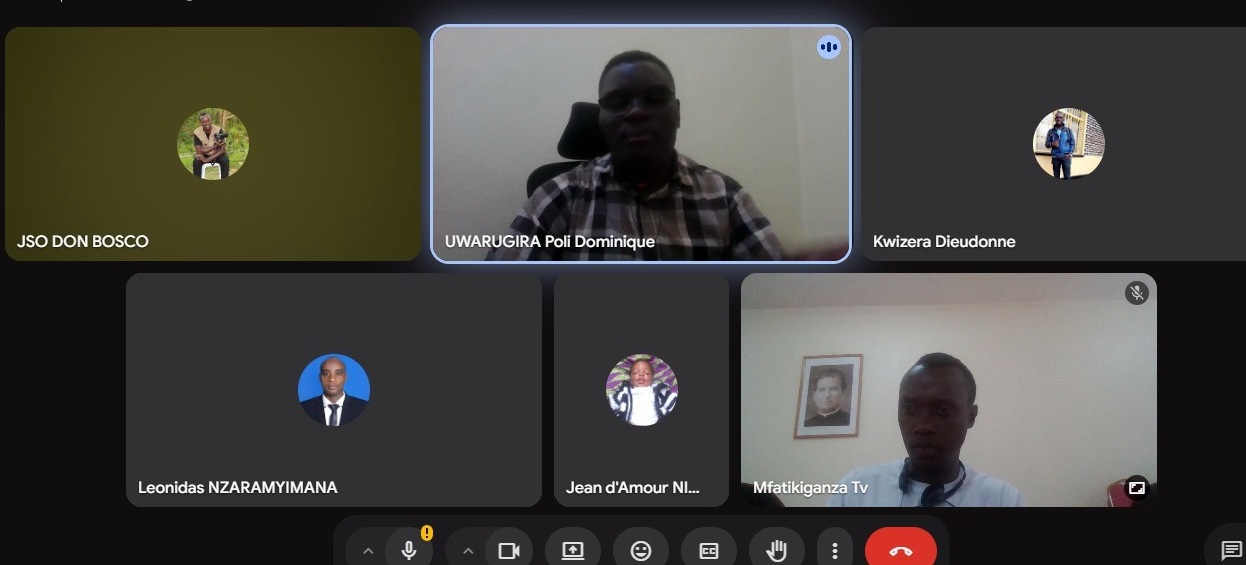
On 16 July 2026, a meeting was held via the Zoom platform, bringing together Job Service Office (JSO) staff from the Salesian Technical and Vocational Education and Training (TVET) institutions, namely Don Bosco Gatenga TSS, Don Bosco Rango TSS, and Don Bosco Muhazi TVET School. The meeting aimed to further strengthen collaboration among all levels of the Job Service Office and to jointly review strategies for improving the services provided to both current students and graduates.
The meeting provided a valuable opportunity to assess the progress of Job Service Office activities and to prepare the direction for the upcoming academic year. Participants emphasized that collaboration among all levels of the Job Service Office is one of the key pillars in helping TVET students acquire labour market-relevant skills and successfully transition into the world of work.
The meeting was attended by Job Service Office staff at the institutional level (Local Job Service Office), the provincial level (Provincial Job Service Office), and the national level (National Job Service Office). It was also attended by academic staff from all three institutions, demonstrating their commitment to continuously aligning technical and vocational education with labour market needs.
Among the topics discussed, participants first received updates on the use of the Inserjeune application, which is intended to help young people access information on employment opportunities, training, and other services that support their personal and professional development. Participants discussed ways of increasing awareness and utilization of the application among students so that it can help them prepare for their professional careers at an early stage.
An assessment was also conducted on the utilization of the Don Bosco Virtual Training Institution platform, with the objective of evaluating how it can help students enhance their knowledge through technology-supported learning. Participants noted that the platform has the potential to play a significant role in strengthening young people’s capacities and recommended continued awareness campaigns to increase its use.
Another major topic was the sharing of experiences on Graduate Follow-up and Tracer Activities. Each institution presented how it follows up with its graduates and the challenges encountered. Discussions focused on identifying a common approach to collecting reliable information on graduates in order to determine where they are employed, who has started their own businesses, and who still requires support.
Participants also reviewed the activities carried out during the 2025–2026 academic year, examining achievements, challenges encountered by the Job Service Offices, and lessons learned. They acknowledged that although significant progress had been made in following up with students and linking them to employment opportunities, there is still room for improvement, particularly in strengthening collaboration with employers, collecting graduate data, and continuing to build the capacity of Job Service Office staff.
In preparation for the 2026–2027 academic year, participants also discussed strategies aimed at improving the quality of services provided by the Job Service Office. The discussions focused on strengthening collaboration among institutions, coordinating activities, making better use of technology, and providing effective services based on reliable information.
During a special session, Dominique Uwarugira, representing the Provincial Job Service Office, together with Twizeyimana Emmanuel, representing the National Job Service Office, presented the Job Service Office Action Plan to the participants. They requested each institution to present its achievements, planned activities for the coming year, and areas requiring additional capacity building.
Dominique Uwarugira stated:
“The purpose of this plan is not only to collect reports, but also to understand where each institution stands, identify where support is needed, and determine how we can work together to ensure that all activities achieve their intended objectives and contribute to youth development.”
Participants appreciated the use of the Zoom platform, noting that it helped save both time and resources while enabling people from different parts of the country to meet conveniently. However, they also emphasized that face-to-face meetings remain highly valuable for strengthening collaboration and facilitating in-depth discussions. They recommended holding at least three face-to-face meetings each year to complement online meetings.
In closing, participants reaffirmed that collaboration among the Local, Provincial, and National Job Service Offices will remain a key pillar in improving the services provided to students and graduates. It was emphasized that combining efforts, sharing experiences, and monitoring the implementation of agreed actions will help Don Bosco institutions continue providing technical and vocational education that responds to labour market needs.
The participants committed themselves to implementing the resolutions adopted during the meeting, strengthening collaboration with partners, and continuing to innovate in the delivery of Job Service Office services. These efforts are expected to make a significant contribution to increasing young people’s opportunities for employment, entrepreneurship, and participation in the country’s sustainable development.

SUBSCRIBE TO OUR NEWSLETTER